This week we are going to wrap up this series on how momentum is used in the ETF models. We have already seen the statistical basis for favoring momentum and went into a little detail about how momentum is used in the models, but what is the real-world phenomenon that explains the effectiveness of momentum?
In economics, there are a variety of different system at work in different environments. There are self-balancing systems designed to keep something in equilibrium. Examples of this might be the sweat-chills system your body uses to cool down or heat up when its core temperature falls or rises, or the way FED policy attempts to provide a not too cool but not too hot environment in the economy. In contrast to this, momentum fits in the category of positive feedback or “virtuous cycle” systems.
A positive feedback system is one where there are fewer or no counter-acting forces to bring the system back into equilibrium. Without the counter balancing effects, an initial positive (or negative) shock can gain momentum and cause increasingly larger positive (or negative) effects. These positive “shocks,” when it comes to investing, can be anything from new technological advancements, demographic or consumer shifts, to improvements in business conditions or political reforms that open new markets.
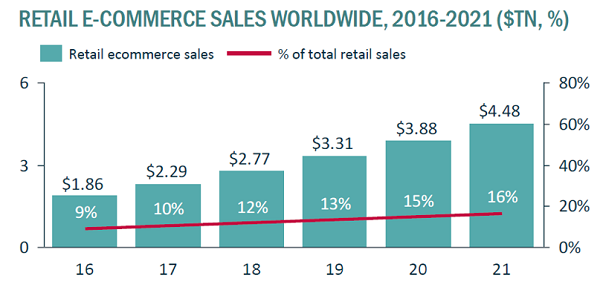
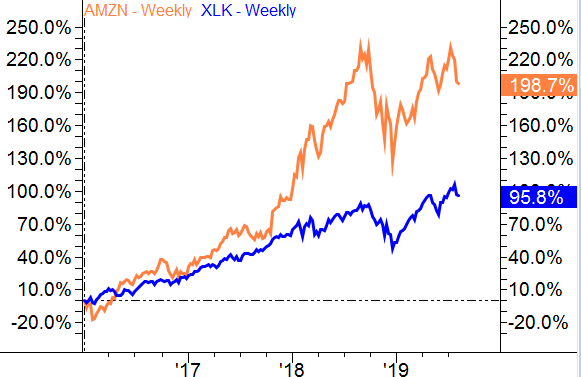
Technology has been the great transforming feature of modern life. It only took a little more than 60 years to go from our first flight to landing on the moon. More recently, the computer revolution has been changing and re-shaping almost every industry. You don’t have to look any further than the growth in online shopping and e-commerce.